


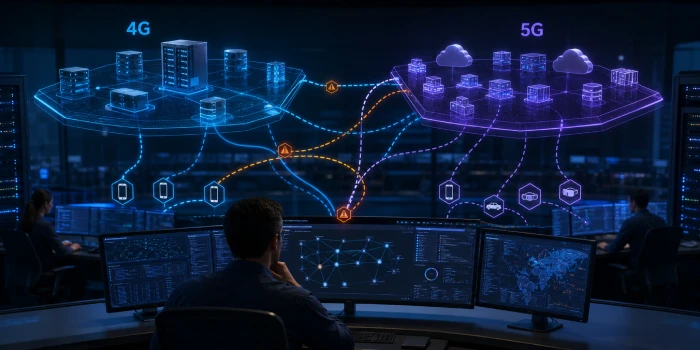
Alarm Volumes Overwhelm NOC Teams
Growing volumes of alarms, KPIs, and network events create noise that makes it harder to identify which incidents require immediate attention.
We transform network operations with AI-driven intelligence that correlates alarms, identifies root causes, automates diagnostics, and executes governed remediation across complex multi-vendor networks.
Challenges
Growing volumes of alarms, KPIs, and network events create noise that makes it harder to identify which incidents require immediate attention.

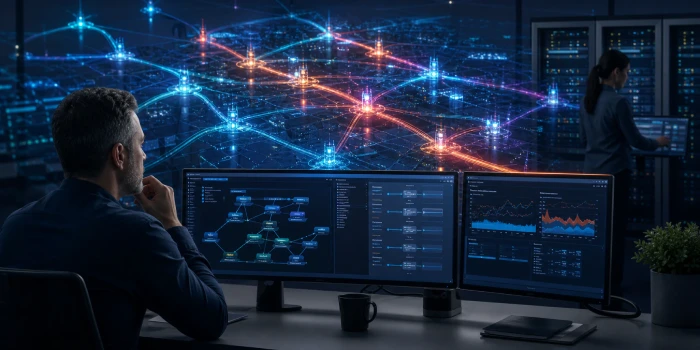
Investigations often require teams to manually correlate information across multiple tools, technologies, and network domains before identifying the underlying cause.
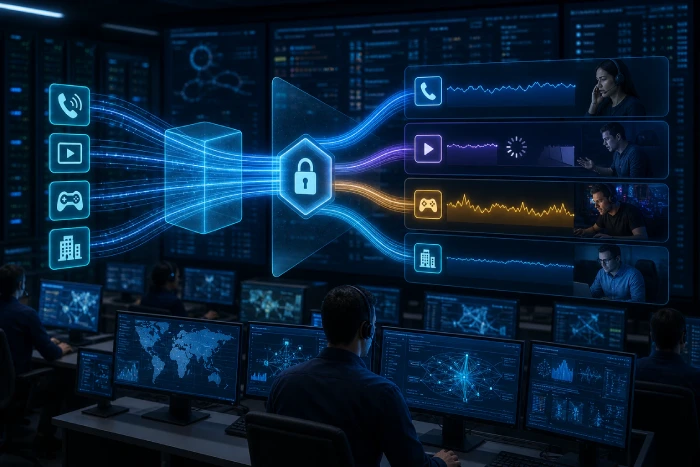
Runbooks, historical incidents, troubleshooting procedures, and engineering knowledge often sit across disconnected systems, slowing diagnostics and creating inconsistent responses.
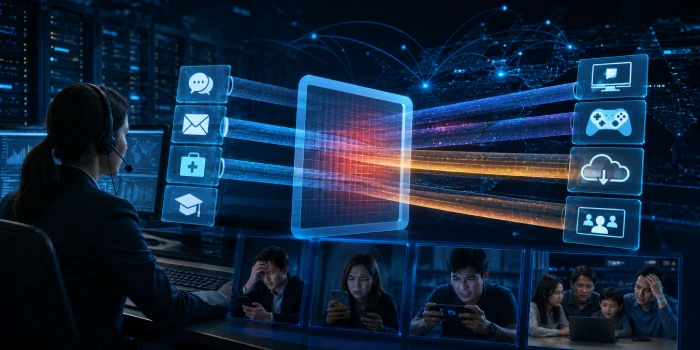
Repetitive L1/L2 diagnostics and remediation consume engineering capacity and increase the time required to restore affected services.
Service-affecting actions require clear controls, approvals, escalation paths, and traceability before autonomous execution can be safely expanded.

Product Overview
TCV-AIOps is our AI-powered NOC solution built on PRISM and Agentrix. It brings retrieval-grounded knowledge access, alarm correlation, anomaly detection, AI-powered root-cause analysis, and agentic runbook automation into a unified AI-powered NOC copilot for incident investigation and operations.
The platform ingests and correlates alarms, KPIs, and network events across multi-vendor and multi-technology environments, then classifies and scores incidents and runs tier-aware diagnostics to accelerate investigation.
AI agents autonomously execute approved low-risk L1/L2 runbooks, while service-affecting changes are routed through human approval. Integration with ITSM, monitoring, NMS/EMS, and ChatOps platforms connects intelligence, remediation, escalation, and documentation across the incident lifecycle.
The Outcomes Are Clear
Capabilities

Correlate alarms, KPIs, and network events across multi-vendor and multi-technology environments to identify related operational signals.

Analyze correlated alarms, KPIs, events, and operational knowledge to identify likely incident root causes and accelerate NOC diagnosis.

Identify abnormal alarm, KPI, and event patterns that may indicate emerging incidents requiring NOC investigation.

Give operations teams and AI agents contextual access to relevant runbooks, procedures, historical incidents, and operational knowledge during investigation.

Classify incidents and execute diagnostic workflows aligned with defined L1/L2 operating procedures and escalation requirements.

Enable AI agents to execute approved diagnostic and remediation runbooks autonomously for defined low-risk operational actions.

Route service-affecting or higher-risk changes through human approval before execution, maintaining operational control over critical actions.

Automatically document incidents and generate structured root-cause summaries to reduce manual reporting effort and preserve operational knowledge.

Connect with existing ITSM, monitoring, NMS/EMS, and ChatOps platforms to embed AI-driven operations into established NOC workflows.
Process
We bring together alarms, KPIs, and network events across multi-vendor and multi-technology environments to establish operational context.
AI-driven intelligence correlates related signals, identifies anomalies, and scores incidents to help separate actionable issues from operational noise.
TCV-AIOps combines operational data with retrieval-grounded knowledge to run tier-aware diagnostics and identify likely root causes.
AI agents execute approved low-risk L1/L2 runbooks autonomously, while service-affecting or higher-risk actions are routed for human approval.
Remediation outcomes are captured, incidents are updated across connected operational systems, and AI-generated RCA summaries document the resolution.
Results
Accelerate diagnosis and remediation by connecting operational intelligence, root-cause analysis, and governed runbook execution.
Correlate and classify operational signals to help NOC teams focus on incidents that require action.
Accelerate the diagnostic phase with correlated operational context, retrieval-grounded knowledge, and AI-assisted investigation.
Automate repetitive L1/L2 diagnostics and approved remediation tasks, allowing engineering teams to focus on more complex incidents.
Execute diagnostics and remediation through established runbooks, escalation paths, and operational controls.
Extend autonomous operations safely through tier-aware execution, human approvals, and controlled remediation workflows.
Automatically capture RCA summaries and incident context to preserve knowledge and improve future investigations.